Quote, Invoice, Work Order: One Job, Three Documents
Most jobs need three documents, and they are not the same document three times. An estimate wins the work, a work order authorises it, and an invoice bills it. Each answers a different question, and each is checked by a different person.
The trap is treating them as copies. Change the scope on the invoice and it no longer matches the order the client signed; bill from an estimate that expired and the number is wrong. The fix is a single thread — one job or reference number — that runs through all three.
The estimate: what will it cost?
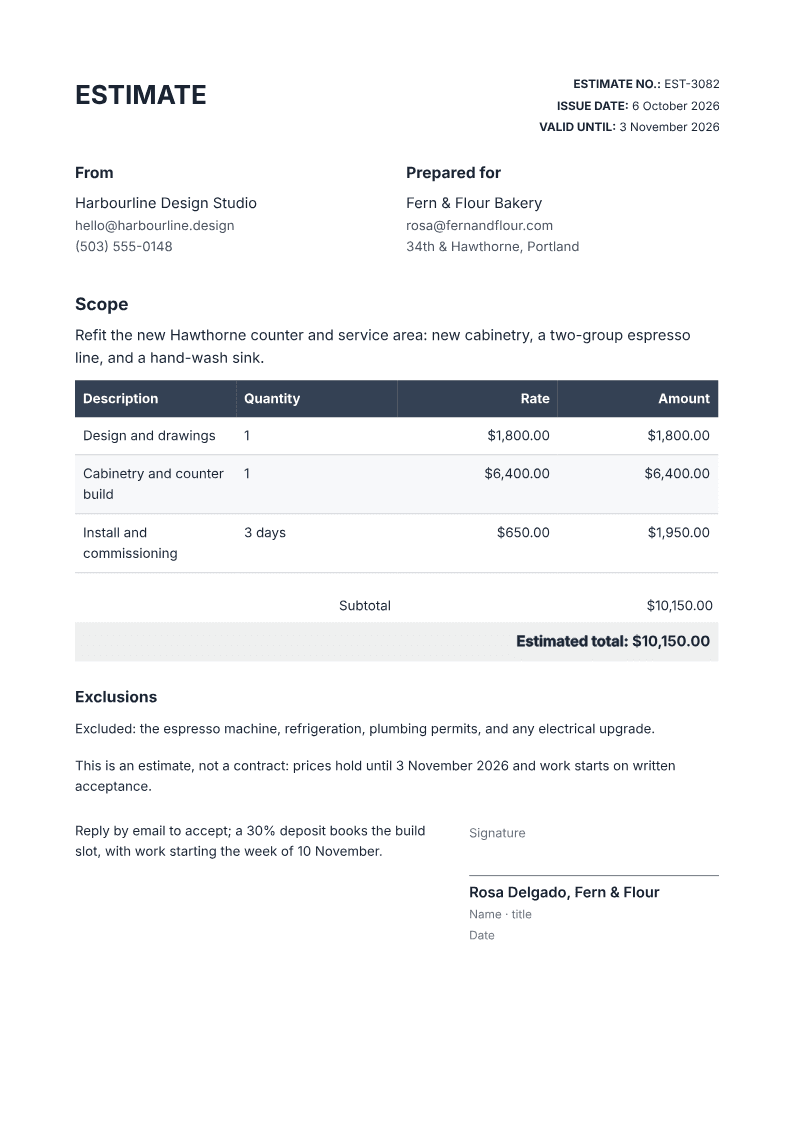
An estimate (also called a quote) goes out before the work. It needs:
- the scope, in enough detail that "what is included" is answerable;
- rates or prices, per line;
- a valid-until date, because prices move;
- the exclusions, so the client knows what is not covered;
- a line that says it is not a contract.
Start one at the estimate generator.
The work order: what are we doing?
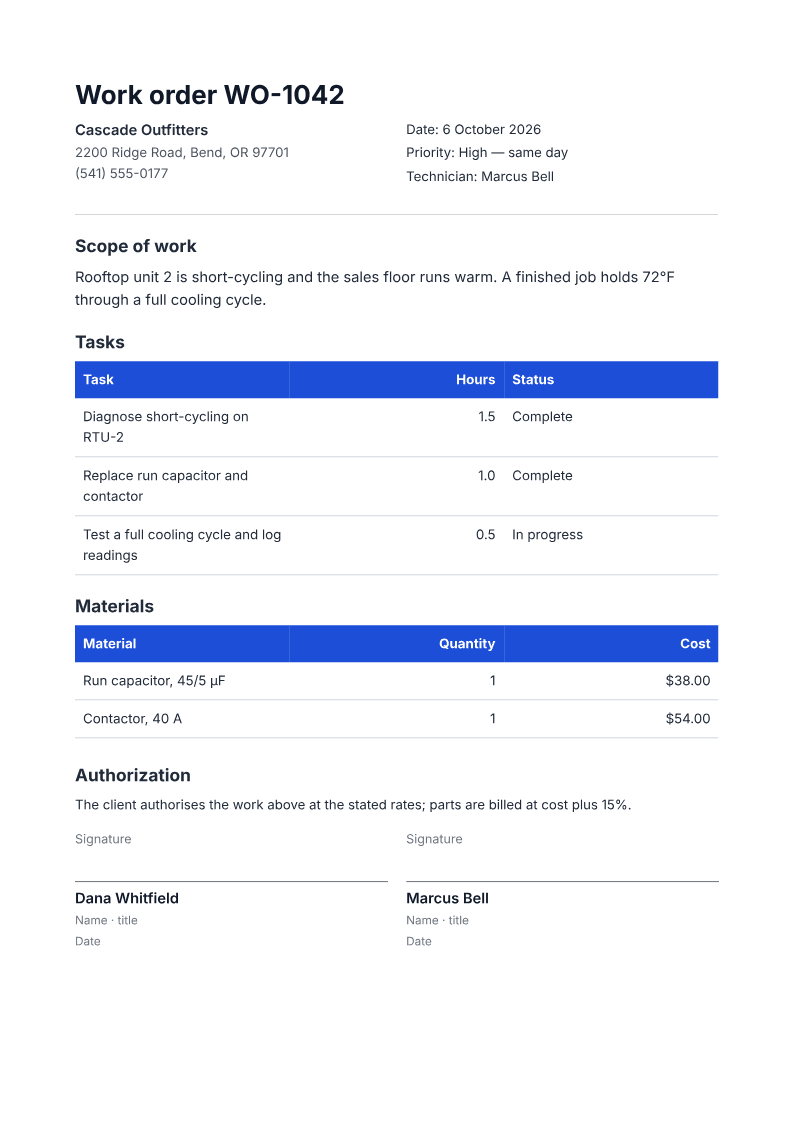
Once the client says yes, a work order turns the estimate into instructions. It needs:
- the job reference from the estimate;
- the tasks, and who owns each;
- materials, with quantities;
- the schedule, or at least the start date;
- a signature line, because the work order is the authorisation.
The work order is the document the people doing the work actually read. Keep it concrete: one task per line, and the same prices as the estimate.
Start one at the work order generator.
The invoice: what do you owe?
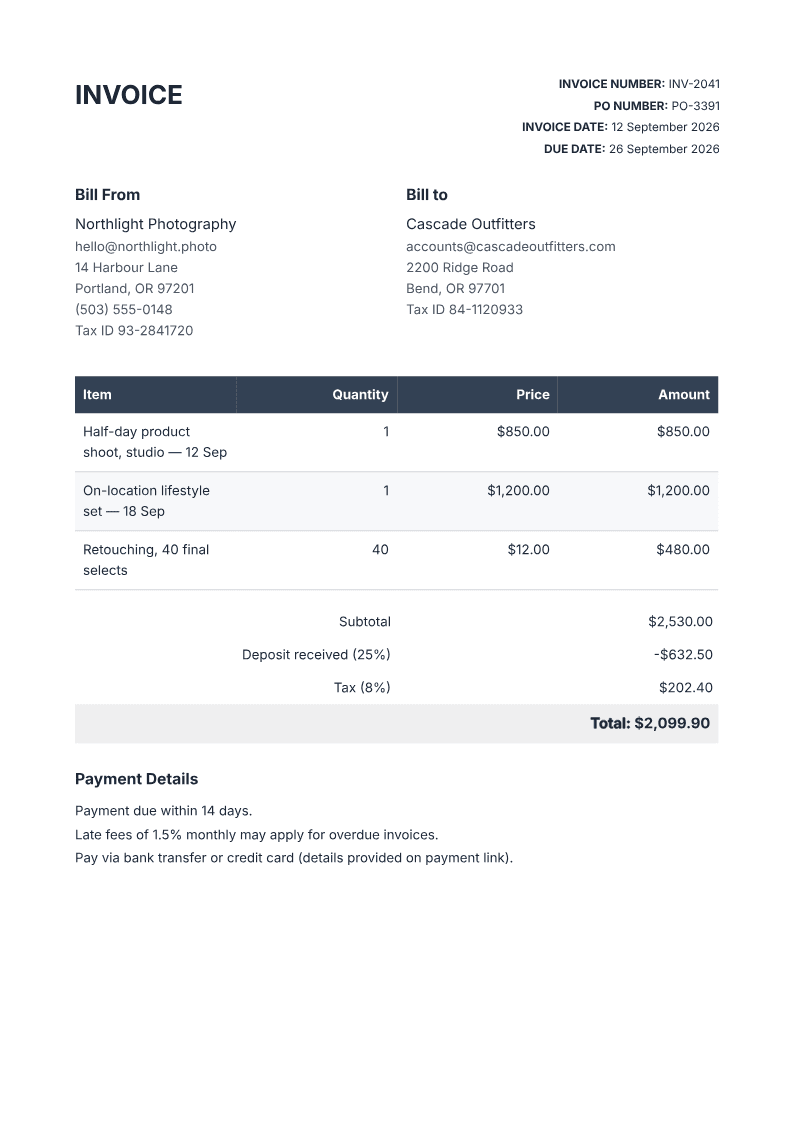
The invoice comes last, and it should read straight off the work order. It needs:
- the same job reference, plus a PO number if the client gave one;
- line items that match the work order's scope;
- the totals: subtotal, tax, any deposit already received, and the balance due;
- the payment terms and the due date;
- where to pay.
Start one at the invoice generator. If the client is the one ordering, a purchase order plays the buyer's half of the same conversation.
The thread that holds them together
Three habits keep the documents agreeing with each other:
- One reference number. Use the same job or estimate number on the work order and the invoice, so anyone can trace the job end to end.
- Copy the scope; do not retype it. The invoice's line items should be the work order's scope with prices attached.
- Date everything. An estimate has a valid-until date, a work order has a start date, an invoice has a due date. Undated documents cause the arguments.
A worked example
A studio quotes a website build: design at a day rate, build at a fixed price, hosting billed separately, valid for 30 days, exclusions named. The client accepts. The work order repeats the scope as tasks, adds the start date and a sign-off. When the build ships, the invoice repeats the line items, adds the tax, subtracts the deposit, and states net-14 terms.
Same job number, same scope, three audiences: the buyer, the doer, and the payer.
Frequently asked questions
What is the difference between an estimate and an invoice?
An estimate proposes a price before the work, and it can expire; an invoice requests payment after it. The line items should match, but only the invoice asks for money.
Do I need a work order if I have an estimate?
If someone else does the work, yes. The work order is the authorisation and the instructions; the estimate is the price. A small job can fold the two together, but anything with a crew or a contractor benefits from the split.
Should the invoice match the estimate exactly?
The scope should, and the prices should unless something changed. If the scope changed, bill the change as its own line so the client can see why the total moved.
Can I make all three with the same tool?
Yes. PaintPDF has an estimate generator, a work order generator and an invoice generator, each with a free example you can download before signing in.
Build the invoice from the same scope you quoted. Free to start, no watermark.
Generate my invoice